
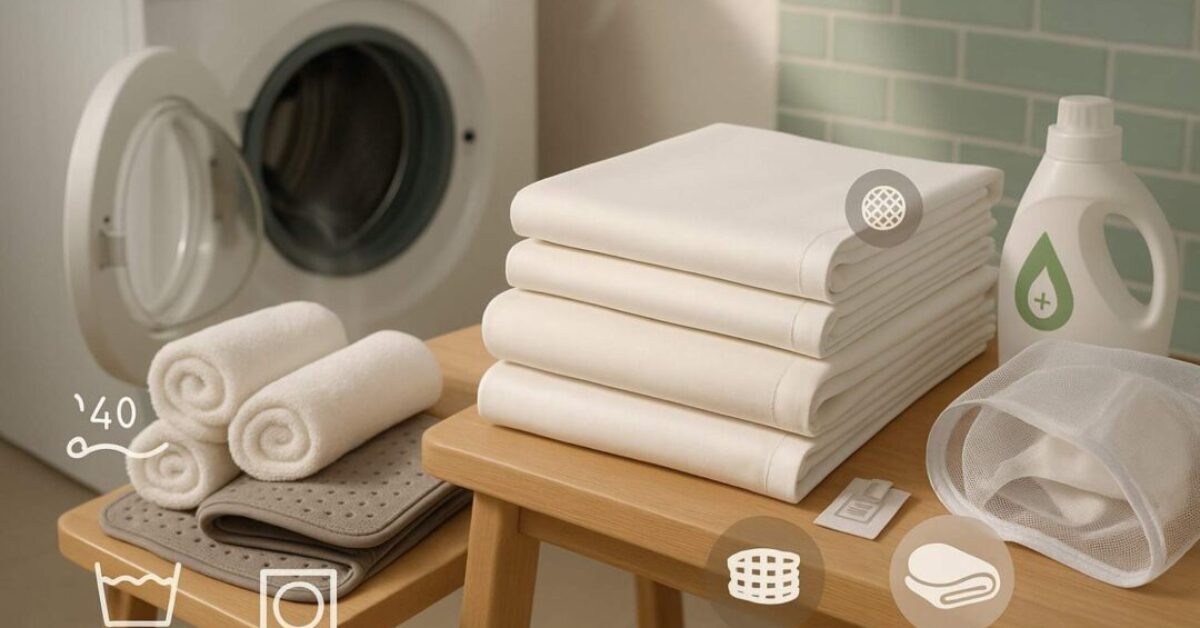
Most great sheets are lost in the laundry, not in the bedroom. Too-hot cycles bake in wrinkles, heavy softeners suffocate fibers, and rushed drying turns smooth fabric into something that feels tired. This guide gives you practical routines that work anywhere, from Karachi humidity to Dubai apartments, London radiators, and Toronto winters, so your bedding stays soft, clean, and true to the feel you bought it for.
We will keep this human and useful. Expect short recipes, quick fixes, and small rules you can actually remember.
Start here: know your fabric, not just the buzzwords
- Percale uses a one over, one under weave. It feels crisp, matte, and cool. It loves airflow and tolerates heat better than many fabrics.
- Sateen uses floats on the surface. It feels smooth, drapey, and a little warmer. It dislikes harsh heat and rough friction.
- Towels rely on loops for loft. Too much softener flattens loops and hurts absorbency.
- Bath mats come in cotton, microfiber, or cushioned constructions. Backings need gentle heat and full dry times.
If you are not sure what you own, rub a corner. Percale springs back with a quiet rustle. Sateen glides and feels calm in the hand.
The laundry triangle that makes any routine work
Everything is a balance of temperature, chemistry, and time or agitation. Increase one, reduce the others.
- Hotter water cleans faster, but stresses fibers and fades color.
- Stronger chemistry removes soil quickly, but can leave residues or weaken yarns.
- More time and agitation help lift grime, but can fuzz the surface, especially on sateen.
Aim for moderate settings. Only go higher when you truly need to, for example heavy soil or illness.
Ten small rules that protect softness and shape
- Sort properly. Sheets with sheets, towels with towels. Keep jeans, zips, and hook and loop fasteners away from bedding.
- Use mild detergent, measured. More soap does not mean cleaner. It usually means more residue.
- Skip heavy softeners. They coat fibers, reduce breathability, and kill towel absorbency.
- Add a splash of white vinegar to the rinse when fabric feels coated or dull.
- Wash cool to warm for routine cleaning. Save hotter cycles for special cases.
- Dry on medium heat, then pull items while slightly warm and smooth by hand.
- Do not overfill the drum. Sheets need room to move and rinse.
- Turn sateen inside out to protect the smooth face.
- Deep pockets need gentle spins. Very high spin speeds can tire the elastic over time.
Use sunlight wisely. Sun can brighten whites, but long direct exposure can punish colors.
Copy and use these laundry recipes
A) Percale sheets, crisp and cool without stiffness
- Cycle: Normal or cottons, 40 to 50°C.
- Detergent: Mild, dose to soil level. Enzymes are fine.
- Optional reset: Add half a cup, about 120 ml, of white vinegar in the rinse every fourth wash to clear residues.
- Dry: Tumble on medium until just dry. Shake and fold while warm.
- Iron: Optional. A quick pass on pillowcases levels them up.
- Why it works: Percale tolerates heat, and the vinegar rinse keeps the hand fresh.
B) Sateen sheets, keep the glide and avoid the film
- Cycle: Delicate or gentle, 30 to 40°C.
- Load size: Small to medium. Turn items inside out.
- Detergent: Mild. Enzyme is fine. Never use heavy softener.
- Dry: Low to medium. Remove slightly damp and smooth on the bed.
- Iron: If you love a hotel look, use a warm iron on the wrong side.
- Why it works: Less friction protects floated yarns. Moderate heat preserves the subtle sheen.
C) Towels, fluffy and quick to dry
- Cycle: Normal or cottons, 40 to 60°C depending on soil.
- Detergent: Mild. Skip softener.
- Boosts: Half a cup of white vinegar in the rinse when loops feel flat. Oxygen bleach for whitening as per label.
- Dry: Medium heat. Pause once mid cycle to shake out and lift loops.
- Why it works: No softener keeps fibers thirsty. Medium heat protects cotton strength.
D) Bath mats, cotton, microfiber, and cushioned types
- Cotton pile mats
Wash at 40 to 60°C, mild detergent, no softener. Tumble medium until fully dry.
Check TPR or latex backing. Replace the mat when backing cracks or loses grip.
- Microfiber mats
Wash at 30 to 40°C, mild detergent. Dry on low to medium. Avoid high heat that can harden fibers.
- Cushioned or memory foam tops
If machine washable, use a gentle cool wash. Otherwise, spot clean according to label. Air dry flat. Avoid direct harsh sun and high dryer heat.
- Why it works: A full dry prevents musty odors. Correct heat protects grips and foam.
Fast stain fixes that respect your fabric
- Body oils or yellowing: Enzyme detergent plus warm wash. Add a vinegar rinse. Brief sun on whites can brighten, keep it short.
- Fresh blood: Cold water only. Dab, then use an enzyme pre-treat. Wash cool, then warm.
- Makeup or sunscreen: Pre-treat with liquid detergent. For mineral sunscreen, a small drop of dish soap on the spot before washing.
- Tea or coffee: Rinse warm. Use oxygen bleach on whites or light colors as directed.
- Deodorant marks: Dampen, rub with a mild detergent paste, rinse, then launder.
Always test on an inside corner for colored fabrics.
How often to wash, realistic and hygienic
- Pillowcases: every 3 to 4 sleeps, because face oils live here.
- Sheets: every 7 to 10 days in warm climates, every 10 to 14 days in cool or dry seasons.
- Towels: every 3 to 5 uses. Face towels more often.
- Bath mats: weekly for family bathrooms, every 3 to 5 days if the mat stays damp or the bathroom is shared.
If someone is sick, raise the frequency and step up the temperature slightly.
Hard water and humidity, from Pakistan and GCC to the UK and Canada
Hard water leaves minerals that can feel crunchy.
Hard water leaves minerals that can feel crunchy.
Add a water softener, for example washing soda or a softening additive, as directed with your detergent.
Use a vinegar rinse more regularly to clear buildup.
High humidity makes drying slow.
Choose faster drying microfiber mats, lighter towel weights, and allow airflow after showers.
Dry winters with radiators can add static.
For sateen, finish with a short air dry on a rack to calm static without using softener.
Line dry versus tumble dry, pick your battles
Line drying saves energy, yields crisp percale, and is gentle on fibers.
Caution with color in harsh midday sun. Flip mid dry and finish indoors while items are slightly damp.
Tumble drying produces a softer hand and fluffier towels with faster turnover.
High heat ages elastic and backings. Medium is the safe default.
A hybrid approach works well. Give items 10 to 15 minutes in the dryer to relax fibers, then finish on a rack or line.
Five common mistakes that make nice sheets feel cheap, plus fast rescues
- Fix: Half dose plus a vinegar rinse. Repeat next wash.
- Fabric softener on towels kills absorbency
- Fix: Two cycles with hot water and a vinegar rinse to rescue, then stop softener.
- Over drying bakes in wrinkles and roughness
- Fix: Pull while warm, smooth by hand, stack neatly. Dress sateen on the bed while slightly damp.
- Mixing bedding with rough items causes snags and pilling
- Fix: Keep dedicated bedding loads. Use a delicate bag for sateen pillowcases.
- Bleach used as a habit rather than a tool
- Fix: Prefer oxygen bleach for whitening and stains. Reserve chlorine bleach for rare disinfection, then rinse thoroughly.
- Storage that keeps everything fresh
- Use breathable shelves rather than sealed plastic.
- Try the set in a pillowcase trick. Fold the fitted, the flat, and one pillowcase into the second pillowcase. You get one tidy bundle per bed.
- In humid months, add a small cedar block or an unscented desiccant. Avoid strong fragrance sachets that can transfer to fabric.
- Sustainability without sacrifice
- Wash cooler and dry lighter. Modern detergents perform well at 30 to 40°C.
- Choose 500 to 600 GSM towels for real plushness with faster dry times.
- Rotate sets, two or three per bed, to distribute wear and cut emergency buys.
FAQ
- Do I ever use hot water
Only for heavy soil or illness. Routine cleaning works at 30 to 40°C with a decent detergent. - Can I use bleach
Prefer oxygen bleach for whites and stains. Keep chlorine bleach for rare disinfection and rinse thoroughly after. - Why do my sheets feel rough after a few months
Usually residue and over drying. Reduce detergent, add vinegar rinses, and lower dryer heat. - Why do towels stop absorbing
Softeners and residues flatten loops. Deep clean with hot water and a vinegar rinse, then avoid softeners. - How do I keep sateen smooth
Gentle cycle, inside out, moderate heat, and smooth while warm. Avoid crowded loads.


